There are still lots of people who don't get the whole thing about Christian Atheism (or at least the version I'm working on here). And that is understandable. Surely you either believe in God or you don't - if you believe, you follow a certain course; if you don't, you follow another. Why try to ride two horses (or donkeys - but that's for another day)? No man can serve two masters?
Well, it's not quite as simple as that.
The more I learn about human beings and how we wend our way through this world of dizzying complexity and craziness, the more I observe that we do so by subscribing to stories. Beliefs are stories that we tell ourselves, and we sometimes add the additional layer of stating that they are True. However not all stories need to be True to be useful.
This is where the Christianity Compatibility Layer re-enters the fray. An atheist will state the God does not exist (or is very unlikely); a theist will state that God *does* exist. But it's not at all obvious how these statements connect up to what decisions we make in the here and now. Perhaps a theist is looking forward to eternal reward and hoping to avoid damnation; the atheist isn't looking forward to anything much. But is it this thinking-ahead that is really determining how they choose what to do in a given situation?
When the Good Samaritan stopped to help the man at the side of the road, was he thinking about what God had commanded him to do? Or was he using something else as his motivator? It seems very clear that Jesus was pointing out the straightforward compassion that comes from one human seeing another in need - a neighbour, no less. In the authentic Christian tradition, if we are to hold up this parable (which we don't maintain as true in the usual sense) as a guide, we are clearly subscribing to the narrative and using it to inform our own decisions when faced with moral dilemmas.
And for the Christian Atheist this is exactly what the whole story of God and Jesus and even the Resurrection and the supposed Second Coming are - they are a story, and one to which we can choose to subscribe. The mental imagery of the Resurrection isn't just a historical mistake - it's a powerful narrative that retains its transformative power even if we know that it didn't actually happen.
I need to do a lot more to unpack this further, but in the meantime let me just re-emphasise that we can do better than just show that religion is based on things that didn't really happen. We can try to understand why the stories arose, what human needs those stories address, and what the consequences of the stories are. We can recognise that the stories themselves were shaped by the humanity of the people to told and re-told them, and that humanity is our humanity too.
So when we stand up and sing about God or Jesus, we're not lying, and we're not even taking God as a "metaphor". We're seeing God as a transformative story - one created by humans, one that has sub-narratives and tropes and twists and turns. And it's in that story that we too can find and express our humanity, because it's our story too. And we can shape it and use it to speak to others and to reach out and do some good in the world.

Building tunnels

I am very likely not ever going to convince my theist-inclined friends that God is at best a metaphor, and that atheism is a valid form of Christianity, but then they're hardly going to convince me that God actually really exists when every single apologetic argument is demonstrably false - and that Jesus himself didn't engage in apologetics.
But the core issue is wider than Christianity itself - we need to find forms of communal expression in which we Christian Atheists *can* express our heritage and culture, while being welcoming and inclusive and *facilitative* (not just "tolerant") of Theistic Christians, Jews and Muslims and Hindus and whatever. Indeed, I think we should (as the Apostle Paul - not one of my favourite chappies, but that's another argument - sort-of suggested) be able to become as Jews or Muslims as the situation demands. When in a mosque, behave in an appropriate way, and join with the worshippers. Similarly in a synagogue or temple. There is no need to stand aloof. Get in there and feel what your fellow humans feel - maybe you'll learn to understand them just a little better.
This was brought home to me when I was last in Nazareth - a place very close to my heart. One of the Nazareth Hospital doctors was giving us a guided tour through Old Nazareth; some of the places were familiar from my previous forays, others were new to me. I had never been inside the White Mosque, but our group were kindly allowed inside, and the imam showed us into pretty much every nook and cranny of the place - including the entrance to the Nazareth tunnels. Sadly the chap with the key was off for lunch so we didn't get inside, but these little-known old tunnels link the Christian and Muslim places of worship, as well as other centres in the town, so that if Nazareth was ever attacked (as it often was over the centuries), the entire population could join together and mount a joint defence. I later joined an Evangelical Christian friend on the floor of the mosque, and we both "prayed" in our own ways towards Mecca.
Maybe we all need to build these tunnels, and learn to stand together despite our differences. Learn to dig beneath the superstructures to our core shared humanity, deep in the earth. The differences will not go away, and represent different places where we are on our respective journeys.
Next time, I'm going to wait for the keyholder to get back from his lunch.
[Hey, we're on FACEBOOK: http://www.facebook.com/christatheist also Twitter: @heliopolitan ]
Richard Dawkins - new poster boy for Christian Atheism.
 |
| Richard Dawkins is a Secular Christian. In that tie. [Telegraph] |
Yet I think such views miss out some very important aspects of our history and culture in the West. David Cameron got into a lot of trouble for saying Britain is a "Christian country", but the problem with what he said wasn't that it was wrong, but that it had the wrong emphasis. I have argued that Atheism is one (not necessarily the only) logical outcome of Christianity properly applied. For many people, being an Atheist is like a Level 2 Christian, where theists are still stuck at Level 1. They haven't solved the puzzle sufficiently to move beyond the simplistic notion of God and Salvation and all that jazz.
But Richard Dawkins accepts that Britain is steeped in Christian heritage, and this in turn has shaped his thinking, as well as that of everyone "British". We should no more ditch the Bible than we would ditch Shakespeare or Dickens. The hymns of Cowper have a resonance that owes everything to Christianity, and that resonance rings as loudly in the heart of an atheist as it does in a theist. It's not the first time Prof Dawkins has said this. He has previously suggested that "Atheists for Jesus" could be an appropriate slogan (I concur).
Now, not everyone is going to be happy with this - that much is clear. Some people did not arrive at atheism as a journey out of Christianity - or, if they did, it was a hair-raising escape, and they're just glad to be free. For me, I enjoyed Christianity, I got a lot from it, most of my friends are still believers, and I don't even mind religious ceremony. I just don't believe it's true any more. As such, I still feel like a Christian (or what I think a Christian should feel like), and I can rebuild my notion of "Christ" around ideals that the historical Jesus may or may not have embodied, however imperfectly. Because it's a story - a parable. We all have our foundational myths - recognising that they are myths doesn't make them less powerful - on the contrary, it makes them more useful and adaptable. We can do more with them, rather than being doxastically constrained by them.
Maybe this Secular Christianity will catch on. But remember - you heard it here first!
On the word "Action"...
As previously remarked, it is very very quiet round here these days. Sorry for that, but we're all pretty busy, and I don't kid myself that there are thousands of people eagerly awaiting my next comment on any particular subject.
However, there IS a Facebook group, and you're very welcome to head over there and see if anything tickles your fancy: http://www.facebook.com/pages/Christian-Atheism-in-Action/128248970561284
I'm always keen to hear from you, my fine friends, as to how you see Christian Atheism working out in practice. Are you a church goer? Have you pretty much given up on church, but still see yourself as Christian? Or maybe you are an out-and-out atheist who feels that Christianity in particular, as well as Religion in general, are Bad Things that need opposed rather than exapted for humanistic purposes? Maybe you're a Theistic Christian who feels that we're all hellbound heretics, and how dare we assume the label "Christian" for an atheistic humanistic worldview that seeks to express itself via the Christian narrative (as others will express theirs through an Islamic, Jewish, Egyptian, Buddhist etc narrative)?
However, there IS a Facebook group, and you're very welcome to head over there and see if anything tickles your fancy: http://www.facebook.com/pages/Christian-Atheism-in-Action/128248970561284
I'm always keen to hear from you, my fine friends, as to how you see Christian Atheism working out in practice. Are you a church goer? Have you pretty much given up on church, but still see yourself as Christian? Or maybe you are an out-and-out atheist who feels that Christianity in particular, as well as Religion in general, are Bad Things that need opposed rather than exapted for humanistic purposes? Maybe you're a Theistic Christian who feels that we're all hellbound heretics, and how dare we assume the label "Christian" for an atheistic humanistic worldview that seeks to express itself via the Christian narrative (as others will express theirs through an Islamic, Jewish, Egyptian, Buddhist etc narrative)?
As quiet as Mars here...?
Thanks for sticking with this, those of you who are still around! As you'll have noticed, things have been a little quiet around here lately. I hope to get some more material up fairly shortly - no shortage of good ideas, but you know the typical quandary of things failing between neuron and keyboard...
Anyway, here is a little song I wrote about Mars exploration - I hope you like it:
The justification for putting this on here is that when I was a theistic Christian I did sometimes wonder what the vanilla "traditional" Christianity should make of interplanetary travel and colonisation. Would the Rapture on Earth happen at the same time as on other planets? Would other planets be "unfallen" (as C.S. Lewis mused in the "Out of the Silent Planet" fantasy trilogy)? Indeed, could we see the effects of the Fall, as the wavefront of sin impacted on them? Is the Speed of Sin the same as the speed of light?
Looking back from the perspective of the Christian Atheist, this all seems rather silly. But, as I hint in the song, the trail of our footprints leads back to the Turkana clay, and some day we'll have to decide whether we are simply Children of the Earth or Children of the Stars.
Groovy, baby.
Anyway, here is a little song I wrote about Mars exploration - I hope you like it:
The justification for putting this on here is that when I was a theistic Christian I did sometimes wonder what the vanilla "traditional" Christianity should make of interplanetary travel and colonisation. Would the Rapture on Earth happen at the same time as on other planets? Would other planets be "unfallen" (as C.S. Lewis mused in the "Out of the Silent Planet" fantasy trilogy)? Indeed, could we see the effects of the Fall, as the wavefront of sin impacted on them? Is the Speed of Sin the same as the speed of light?
Looking back from the perspective of the Christian Atheist, this all seems rather silly. But, as I hint in the song, the trail of our footprints leads back to the Turkana clay, and some day we'll have to decide whether we are simply Children of the Earth or Children of the Stars.
Groovy, baby.
Name change
OK, after the consultation (thanks, all!) I have decided to change the name from "Church of Jesus Christ Atheist" to "Christian Atheism in Action" (not "inaction"). The new URL for the blog is christian-atheist.blogspot.com (yes, it has a hyphen - sorry about that).
One problem with the "Church" label was that it gave the impression that we were trying to start a denomination. That would be totally against the core concept of the Christianity Compatibility Layer. Another problem was that it juxtaposed "Jesus Christ" with "Atheist" too soon in the game, and I think potentially alienated part of the audience who really need to get a wee bit deeper into the thinking before deciding whether to switch off.
So let me know what you think - is there a better title? Are there other blogs or websites doing a similar thing to this? Are there useful links you can suggest? Is the concept fundamentally flawed, or is there a better way of getting atheists and believers alike to snuggle cosily together under the banner of "Christian" (in the same way as I hope they can do for Judaism and Islam)?
One problem with the "Church" label was that it gave the impression that we were trying to start a denomination. That would be totally against the core concept of the Christianity Compatibility Layer. Another problem was that it juxtaposed "Jesus Christ" with "Atheist" too soon in the game, and I think potentially alienated part of the audience who really need to get a wee bit deeper into the thinking before deciding whether to switch off.
So let me know what you think - is there a better title? Are there other blogs or websites doing a similar thing to this? Are there useful links you can suggest? Is the concept fundamentally flawed, or is there a better way of getting atheists and believers alike to snuggle cosily together under the banner of "Christian" (in the same way as I hope they can do for Judaism and Islam)?
Alienation or Illumination?
It has come to my attention (i.e. I've been collared by one of my nearest and dearest) that the title of this blog, "Church of Jesus Christ Atheist" might be somewhat alienating or even offensive to some Christians, or even to some Atheists. Perhaps the juxtaposition of Jesus Christ and Atheism is too much for some (despite the very deliberate device in the gospels of Matthew and Mark that suggest that Jesus cried out on the cross "My God, My God, why hast Thou forsaken me?").
Whether we like it or not (and I don't - just to make that clear), many Christians and Atheists regard the "other side" with a degree of disdain, suspicion, or even outright hostility, so that putting Jesus Christ together with Atheist might raise a few eyebrows.
My intent in the name was to indeed raise the eyebrows, but not to put people off; rather, I wanted them to read further, to see whether the distinction was as sharp as it is often made out. I would contend that already many people who see themselves as Christian, and unapologetically so, do not believe that the bible records absolutely accurate accounts of past events, do not believe the stories of miracles represent true records of real events, do not believe that Jesus was divine, born of a virgin, or rose from the dead, and don't even believe in God (at least not in the "conventional" way).
So enough preamble. It's over to you folks now: should I change the name of this blog, and if so, what should I change it to? Bear in mind the stated purpose of the blog - to develop a Christianity Compatibility Layer for Atheists. Some ideas for starters:
Opinions welcome below in the comments section. Thanks in advance!
Whether we like it or not (and I don't - just to make that clear), many Christians and Atheists regard the "other side" with a degree of disdain, suspicion, or even outright hostility, so that putting Jesus Christ together with Atheist might raise a few eyebrows.
My intent in the name was to indeed raise the eyebrows, but not to put people off; rather, I wanted them to read further, to see whether the distinction was as sharp as it is often made out. I would contend that already many people who see themselves as Christian, and unapologetically so, do not believe that the bible records absolutely accurate accounts of past events, do not believe the stories of miracles represent true records of real events, do not believe that Jesus was divine, born of a virgin, or rose from the dead, and don't even believe in God (at least not in the "conventional" way).
So enough preamble. It's over to you folks now: should I change the name of this blog, and if so, what should I change it to? Bear in mind the stated purpose of the blog - to develop a Christianity Compatibility Layer for Atheists. Some ideas for starters:
- "Christian Atheist Understanding"
- "Tolerating Difference"
- "What is Truth?"
Opinions welcome below in the comments section. Thanks in advance!
A Christian Atheist response to the #Brady scandal
 |
| [Image source: BBC] |
This has prompted a huge wave of outrage in Ireland, much of it (rightly) directed towards the Catholic Church itself, whose archaic procedures left it effectively legally and morally rudderless, where defence of the Church itself was seen as more important than the protection of little children. Jesus himself had something to say about that, but I don't see the Vatican or the Irish Church hierarchy queuing up to be fitted for their millstones.
But as Christian Atheists, whether Catholic, Protestant or other, what should we take from this sordid affair?
My own view is that we need to learn the lessons - no organisation or structure has the right to decide for itself to deal with criminal matters purely through its own procedures. People collusive in such procedures - which effectively amount to conspiracy to pervert the course of justice - need to examine their consciences, and offer their resignations, even if only to show some degree of contrition. Children need to be protected at all times.
Although writing from an unashamedly Atheist position, I do not feel that religion per se is the great social evil that some Atheists make it out to be. The evil is unchallengeable belief. The arrogance that will see Brady fall (inevitably) derives from an unshakeable belief in his own superiority, and a view that the church can do no wrong. The complete absence of humility is staggering in its extent, but perhaps not surprising, given the attitude of the Roman Catholic Church to those who break ranks (Father Brian D'Arcy being the most prominent and commendable example).
Should Christians leave the Catholic Church for a different church? I can't say. But Christian Atheists should at least make their voice heard on this and other issues. We do not lack a moral compass, as some detractors would imply. On the contrary, we base our dealings with our fellow humans on that Great Commandment (a short sharp Humanist manifesto if ever there was one) to love our neighbour as ourselves. The irony is that the priest and Levite in the parable of the Good Samaritan were obeying their religious orders not to touch a wounded person. Yet in following orders, in putting their religious structures and procedures above the act of helping a fellow human being in dire distress, we quite rightly regard them as ghastly hypocrites. And so we should regard Brady. And indeed, so we should regard ourselves when we look back over our lives at the times when we have just followed orders, and left someone to suffer.
Sometimes the best way to show leadership is to resign. In clinging to the ever-more sweaty and sordid reins of power, Brady is putting himself above the victims of his own inexcusable inaction.
The Meaning of Easter
Here's David Rattigan on the topic of how a non-theist can find meaning in the Easter narrative - I think the same probably holds true for Christianity in general. My experience is that there are many Christians (perhaps as high as 15%) who do not believe in God, but for whom their church and the Christian life form a vehicle through which they prefer to see the world (or in which they feel trapped - a somewhat sad, but common enough situation).
I'll go further. For too long Atheists and Agnostics have been excluded from the dialogues that shape Christianity as a religion. It is an evolutionary process, and we are shutting ourselves out of the memepool. As long-time readers of CJCA will know (both of you), there are at least some of us who feel that although Christianity (or any religion) is not "true" in the literal / scientific / historical sense, we remain human animals, with a need (or weakness for) an overarching narrative upon which to pin the various events and processes in our lives. For many people Christianity fulfils this purpose, even though it isn't "real". Similarly for others Islam or Judaism or Buddhism do the trick. But why should we non-theist Christians sit back and let the agenda be set by "believers"?
Should we not have the courage of our convictions - that Jesus died, the resurrection is a legend, that Christians got so much wrong, but that there is a core of a story here that tells us a little about us as a species or a society - and use those convictions to create space for a secular Christian Atheistic viewpoint? A viewpoint that is based on equality, on doing good for others, on promoting tolerance while encouraging open and frank debate?
OK, I'm rambling now, and the evening wine is kicking in, but as we emerge into Easter Sunday, perhaps it's time that Christian Atheism had its own little resurrection, and became seen as a player - albeit a small one - in the grand scheme of things. I'd appreciate any comments (as always!)...
I'll go further. For too long Atheists and Agnostics have been excluded from the dialogues that shape Christianity as a religion. It is an evolutionary process, and we are shutting ourselves out of the memepool. As long-time readers of CJCA will know (both of you), there are at least some of us who feel that although Christianity (or any religion) is not "true" in the literal / scientific / historical sense, we remain human animals, with a need (or weakness for) an overarching narrative upon which to pin the various events and processes in our lives. For many people Christianity fulfils this purpose, even though it isn't "real". Similarly for others Islam or Judaism or Buddhism do the trick. But why should we non-theist Christians sit back and let the agenda be set by "believers"?
Should we not have the courage of our convictions - that Jesus died, the resurrection is a legend, that Christians got so much wrong, but that there is a core of a story here that tells us a little about us as a species or a society - and use those convictions to create space for a secular Christian Atheistic viewpoint? A viewpoint that is based on equality, on doing good for others, on promoting tolerance while encouraging open and frank debate?
OK, I'm rambling now, and the evening wine is kicking in, but as we emerge into Easter Sunday, perhaps it's time that Christian Atheism had its own little resurrection, and became seen as a player - albeit a small one - in the grand scheme of things. I'd appreciate any comments (as always!)...
The Bible is full of nasty bits!
Some Christian apologists take the view that God is perfectly moral, and would never resort to the sort of evil that incorporates practices like slavery or genocide. The Old Testament fairly resounds with pretty horrible stuff, including the genocide of the Amalekites, including infants and small children. On other occasions we hear how everyone is to be killed except virgins of shaggable age (over 11 in the Ancient Near East), who can be taken as concubines. Such atrocities are committed with the express sanction and command of The Lord.
Now leaving aside the questionable historicity of many of these episodes, we're still left with a bit of a problem if we want to rescue God and Christianity from accusations of rather poor ethics. Theistic Apologist Paul Copan has written a book "Is God A Moral Monster?", and of course comes down on the point that no, God is very much not a moral monster, but is profoundly moral. The Amalekites deserved it, and anyway it wasn't as bad as all that. His points are refuted entirely (and laboriously) by the indefatigable Thomas Stark - quite a task!
But be that all as it may - how should Atheistic Christians respond to the horrible genocides, human trafficking, slavery and rape ordered by God? We can hardly make excuses for the behaviour, nor can we suggest with our modern ethical humanist heads on that this was anything other than appalling abuse. We are wiser now. We do have better ethical standards. But what can we do? How can we remain within the Christian tradition and condemn the god of our ancestors?
Well, there are a couple of points. First, it does have to be condemned. The God of the Old Testament (and indeed the New Testament) is indeed a "moral monster". The abstraction we created seems to be all too capable of getting out of control, and leading us into evil that we can somehow resolve into "good". The priest and the Levite walking past the injured man on the road to Jericho similarly can justify their actions based on their idea of divine command. But those options are not available to the Christian Atheist. We can't change the past, and we can't wash our hands of it either.
These episodes in our past and in our bibles serve to show what can happen if dogma is taken to be proscriptive. If we invest our energies in following divine or earthly authority, we are setting ourselves up to becoming moral monsters. We need to recognise the mistakes and evils of the past as mistakes and evils, and ensure that we really do practice the most important thing Jesus ever said: Do unto others as you would have them do unto you.
Now leaving aside the questionable historicity of many of these episodes, we're still left with a bit of a problem if we want to rescue God and Christianity from accusations of rather poor ethics. Theistic Apologist Paul Copan has written a book "Is God A Moral Monster?", and of course comes down on the point that no, God is very much not a moral monster, but is profoundly moral. The Amalekites deserved it, and anyway it wasn't as bad as all that. His points are refuted entirely (and laboriously) by the indefatigable Thomas Stark - quite a task!
But be that all as it may - how should Atheistic Christians respond to the horrible genocides, human trafficking, slavery and rape ordered by God? We can hardly make excuses for the behaviour, nor can we suggest with our modern ethical humanist heads on that this was anything other than appalling abuse. We are wiser now. We do have better ethical standards. But what can we do? How can we remain within the Christian tradition and condemn the god of our ancestors?
Well, there are a couple of points. First, it does have to be condemned. The God of the Old Testament (and indeed the New Testament) is indeed a "moral monster". The abstraction we created seems to be all too capable of getting out of control, and leading us into evil that we can somehow resolve into "good". The priest and the Levite walking past the injured man on the road to Jericho similarly can justify their actions based on their idea of divine command. But those options are not available to the Christian Atheist. We can't change the past, and we can't wash our hands of it either.
These episodes in our past and in our bibles serve to show what can happen if dogma is taken to be proscriptive. If we invest our energies in following divine or earthly authority, we are setting ourselves up to becoming moral monsters. We need to recognise the mistakes and evils of the past as mistakes and evils, and ensure that we really do practice the most important thing Jesus ever said: Do unto others as you would have them do unto you.
Hello, we're Atheists. We come in peace. Prepare to surrender your Church.
 |
| Looks lovely. Let's take it. |
The reality is, of course, that secularists are really only doing the job that Jesus started. In the manner of prayer, Jesus (you can look this up in Matthew 6) was quite explicit - keep it private. Don't trumpet your religiosity. Keep your faith between you and your god, and love your neighbour as yourself, regardless of religion. That last bit is justified, for it is one of the core messages of that wonderful secular parable, the Good Samaritan.
Many Christians, of course, accept this, and it is something of an encouragement to those of us who are Atheistic Christians to see a degree of convergence - often from some of the more evangelical quarters. They know what it's like to be a Dissenter, kept on the outside by established modes and mores of officially-sanctioned religious display.
And then on the other hand we have the calls from respected atheists like Alain de Botton for us to recognise the deeply human needs that the churches have recognised and evolved to cater for - needs for nurturing, direction, inspiration, and even directive ethical guidance. De Botton feels we should incorporate these principles (including the medium of the Sermon) into secular life. He has written a brilliant book, and it's certainly thought-provoking, but is he trying to reinvent the wheel? How can atheists on the one hand decry the toxins of religion, and on the other seek to build a weird simulacrum of religion into our secular society? A conundrum.
Well, it's not a conundrum to Christian Atheists. Furthermore, I propose a Plan that can resolve both these thorny problems, and more besides. A Plan that seems daring and doomed to failure, but which, I would argue, is already well underway, and just needs a little push to take it over the line.
What is that Plan?
A full Atheist takeover of the Church of England. That's what.
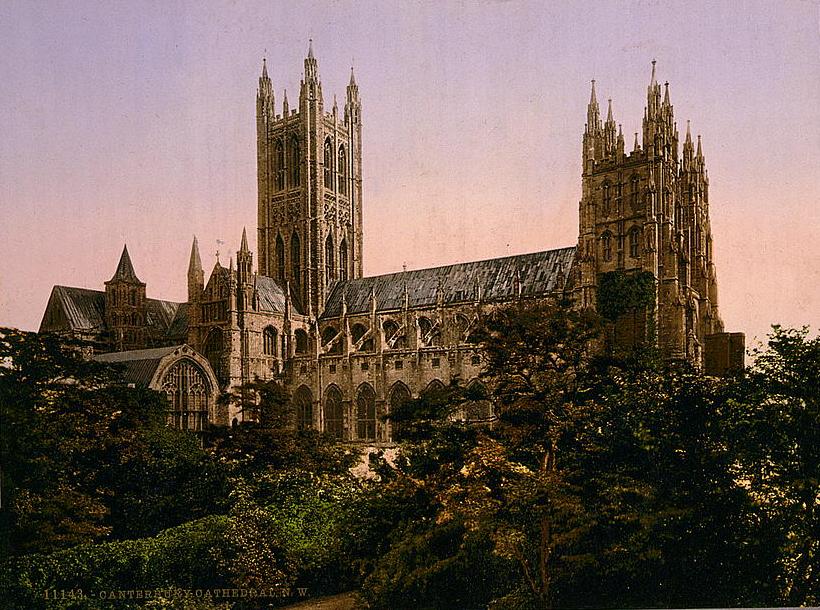
Now I can hear the WTFs sounding out like the bells of Canterbury Cathedral, but think about it. We know there is no god - we don't have to fool anyone. What's more, we're quite explicit (at least in the CJCA) that we are seeking to remap a fine (and sometimes not-so-fine, but there are lessons there too) tradition to a modern understanding of science and ethics. We often feel that we are on the fringe, and many of us are trying to break away from churches. However, think about it. About 25% of Church of England clergy and about 15% of regular attendees are atheistic or agnostic anyway. And congregations are tiny - if a bunch of Christian Atheists turned up on a Sunday, we could easily make a majority. We could get those agnostic clergy to publicly identify as Atheistic Christians, and get the CJCA message out there.
I think (OK, I don't know) that enough people would embrace this concept - and the vision behind it - to effect a real demographic change within the pews of England, Scotland, Wales and Northern Ireland, if not the world. Yes, I know the Anglican church is split up across our nations and outside the UK, but the same principle holds.
What then? Well, we could be very open about our atheological project. Theology would cease to be the study of the non-existent, and a more practical remapping exercise, such as we've been doing (minimally) here at CJCA. We can keep Christianity, and seek a way forward, but using the humanistic principles that seem, as far as we can tell, to be close to the teachings of a Jesus who is a historical "Christ", but who also made mistakes, and could be a bit of a dick when he chose to be. A Jesus that we can actually identify with more!
We need explicitly atheistic sermons (sensitively delivered) ringing out from the pulpits. We need ethical humanistic guidance illustrated with examples, good and bad, from our rich biblical sourcebook and other historical sources. We need scholars to examine the bible and other ancient texts with a proper academic attitude. We need commentators from an Atheistic Christian perspective to go on TV, on radio, on the Internet and elsewhere. We can voice Church support for science, tolerance, inter-faith dialogue (with "faith" being specified as a faith in essential humanity), political activism and societal and intenational ethics.
And we need an institution that will allow us to do that. I suggest that the Anglican Church looks nice. Why don't we simply take it over? All it needs is that teensy push.
I'm only joking a little bit.
Guest book review: “Walking Without God - In Search of a Humanist Spirituality” by Ben Whitney
[This is a new (but hopefully to-be-repeated) feature from CJCA - a guest book review. This review is from Simon Clare, the author of the marvellous blog "Faithless Eye". Simon has blogged his experiences as an atheist attending an Alpha Course, and you'll be surprised and enlightened by how he got on.]
“Walking
Without God - In Search of a Humanist Spirituality” by Ben Whitney
 |
| Ben Whitney |
Review by Simon Clare Tw: @FaithlessEye : http://lookthroughmyfaithlesseye.blogspot.com/
Alain de Botton’s “Religion for Atheists” is receiving a lot of
well-deserved attention in the mainstream media as he is a very
well-known writer and the cogs of the publisher’s promotional
machine are whirring away. His book - or at least the headlines it
has spawned - has also come under the scrutiny of surprisingly
indignant atheists who resent the very idea that someone can be
secure in their atheism at the same time as recognising the fact that
many aspects of religion are worth reclaiming for humanity.
Perhaps
de Botton’s book is too big a step for such atheists. To get
someone to move from a position where they see all religions as
fundamentally evil to one where they can objectively recognise their
positive qualities is a little like asking somebody whose life has
been ruined by alcoholism to try to appreciate the marvellous
flavours of fine whiskeys - and marvellous they truly are.
I
would recommend “Walking Without God” as a stepping-stone between
militant atheism and a more absorbent humanism. Specifically I would
suggest that grumpy, die-hard atheists read it just before they start
“Religion for Atheists”. One of the unique things about this book
is that it is also my first choice recommendation to Christians who
might want to understand how it is possible for non-believers to have
a sense of morality. I used to recommend A.C. Grayling’s “The
Meaning of Things” but Ben Whitney’s book would be far more
effective.
In “Walking Without
God” former Baptist minister Ben Whitney manages to describe - in
brilliantly simple language - a completely humanist basis for his own
morality and ethics, set against a background of the Christianity
that he was brought up in. Without renouncing his past or dismissing
the views of believers, he shows that you can move seamlessly from
being a Christian to being a non-religious, good person.
This book is
self-published by Ben Whitney so does not have a vast marketing
infrastructure working in the background to promote it. Many critics
of de Botton’s book have benefited from the publicity associated
with it, they just link their blog with the right hashtag and
thousands of de Botton supporters or detractors flow to their
websites. Such opportunist critics deserve none of this exposure and
writers such as Whitney deserve it all. Books like “Walking Without
God” are rare and they have paved the way for de Botton’s work;
supplying us atheists who do not dismiss every aspect of the church
out of hand with literature to fuel and inspire us.
The
book consists of nine chapters; each one a response to one of the
psalms. When I first saw the list of chapters, I admit that I feared
I had been suckered into buying a Christian book that was
masquerading as humanist one. I was not used to seeing atheists
dallying this closely with the enemy - with scripture. However, my
fears were shown up as the petty prejudices they were within a few
pages, when Whitney assured me that he no longer believes in a
supernatural ‘God’. “It just does not make any sense to me.”
Whitney
writes with a secure, humble certainty that there is no God but does
not labour this point. He does not mince his words and says that the
idea of
“..salvation through Jesus to secure our eternal future, but
only for those who believe certain things about him, is particularly
impossible to believe.”
He
states clearly what he doesn’t believe without then making
inferences about the mental abilities of those who do believe such
things, which is what so often happens when atheists write about
their beliefs. Whitney demonstrates that there is simply no need to
do that.
One
of the refreshing characteristics of Whitney’s approach is that he
writes only of his own thoughts and conclusions. At no point does he
suggest that this is what we ought to think, or that the way he
thinks is the best way. He has no need to call attention to his own
authority on any matter either, as he is not trying to change the
reader’s mind. This is an essential part of why this book is such a
joy to read and to read again.
Whether a writer is
atheist or Christian, when they attempt to bring us around to their
way of thinking they can’t help but be coercive to some degree. Ben
Whitney simply lays his thoughts out in plain view and the reader is
free to take them or leave them, to agree or to disagree. The mind of
the reader is left to do its own thinking in its own way. In reading
this review, you will have noticed that I am trying to convince you
that my thoughts about this book are the right thoughts and that you
ought to have this opinion too. You may well resent this, and maybe
you should. My point is that there is a very subtle distinction
between a writer who is only writing about their own thoughts and a
writer who is also trying to influence the reader’s mind on some
level. Perhaps it was a reaction to having read a couple of
evangelical Christian books prior to reading this, but I really
appreciated someone talking to me without trying to subliminally
change my mind.
One of many fine
examples of Whitney’s ability to convey fundamental and powerful
concepts is in Chapter 7, where Whitney talks about the existence of
evil in the world and how it is often seen as an external force. In
typically straightforward language he mentions the idea of life being
a battle between the forces of good (God) and evil (the Devil) and
how this is the way the existence of evil in the world is
characterised by many. He then reminds us that this is not what the
bible says at all - the serpent was part of the creation too, so
whether you believe in God or not, evil is just part of reality. The
manifestation of evil, he says, is something that we are responsible
for. Blaming the devil for it or trying to hide from it will simply
not make it go away and neither will belief in God. Evil is happening
to real people right now and only us humans have the power to stop
it. God might be content with having set up a planet where evil
happens, but Whitney wants it to stop, here and now.
This
book is short and concise. You can read it all on a Saturday morning
if you like and I’d bet that for the rest of the day you would be a
slightly more excellent human being for having done so. You might
even be inspired to read the psalms, secure in the knowledge that
they won’t infect you with faith because you will know you can just
read them as critically as you would any other literature, free to
discard the silly bits, but free also to indulge fully in the parts
that resonate with your own perspective on the universe.
“Walking
With God” shows us what it actually looks like when humanity
outshines the religions it created.
-Simon Clare
-Simon Clare
More good stuff from Alain de Botton
It seems people are determined to either misunderstand or misrepresent Alain de Botton's latest offerings about religion, but I think that he's Alain de Spot-on. From the Christian Atheist (or Atheistic Christian) perspective, a lot of what he has to say makes eminent sense. In some ways secularism has abandoned moral engagement, and left the field wide open to religions. Religions have over the years managed to accrete a number of ways of dealing with the sorts of things that plague this species of sentient ape during daily life, and despite the underlying untruth of their dogmas and beliefs, there is a lot of good there. Perhaps we should throw out the baby Jesus, but keep the bathwater.
Here's the video: http://vimeo.com/35701336
Enjoy, and please leave a comment here and at the main Vimeo site. Your ideas about how to integrate this with Christian Atheism would be most welcome.
Here's the video: http://vimeo.com/35701336
Enjoy, and please leave a comment here and at the main Vimeo site. Your ideas about how to integrate this with Christian Atheism would be most welcome.
Atheism 2.0
 |
| http://www.alaindebotton.com |
[Incidental point - he was born on exactly the same day as me - the stars must have been in some sort of very auspicious alignment that day ;-)]
Jerusalem: A Biography
I'm reading this tremendous book by Simon Sebag-Montefiore at the moment; it's a 3000-year romp through the history of the world's most fought-over city, and it's wonderful. The problem is that there is just too much history to cover. Surely nowhere else on the planet can have experienced the multiple highs and lows, rebuildings and reinterpretations of Jerusalem? Although it is of central importance to Jews, Christians and Muslims, I do wonder how many of them, if they really knew its history, would retain their beliefs in their religion? Or would they realise that beliefs are unimportant vanities that only serve to keep people apart? And isn't it astonishing that the most impressive religions are not the ones with the most arcane theologies, but the ones that emphasise respect for each other above mere creeds and doctrines? Let's hope the next few years are happier for Jerusalem and the world than the last three millennia.
Atheistic Christianity in action, Dutch style
The Rev Klaas Hendrikse is a minister in the Dutch Protestant Church, and doesn't believe that God is a "thing" or a "being", but a word for human experience. While a lot of traditional believers will have some problems with this purely naturalistic view of Christianity, it strikes a major chord with the many Christians who have come to the realisation that God doesn't really exist in the sense we used to think.
Here is a BBC article on Rev Hendrikse and his church, while here is the Unitarian blogger @TimothyJMoore's take on the subject.
I suspect that there are many people within traditional "theist" congregations who share these views. Any thoughts?
Here is a BBC article on Rev Hendrikse and his church, while here is the Unitarian blogger @TimothyJMoore's take on the subject.
I suspect that there are many people within traditional "theist" congregations who share these views. Any thoughts?
The Authentic Gospel of Jesus
A book by Geza Vermes, author of "Jesus the Jew". JTJ was pretty good, but a little academic & heavy, I thought. I've downloaded AGJ and will see what I think, then post some of my thoughts here.
Anyone else read it? What do you think of the whole enterprise of reconstructing the historical Jesus?
Anyone else read it? What do you think of the whole enterprise of reconstructing the historical Jesus?
Letter to God
There is something heartwarming in this story from the Daily Telegraph in which a six year-old girl, being brought up in a secular household, although attending a church-affiliated school. The children in the school were asked to write a letter to God, asking "How did you get invented?" The little girl, Lulu, showed this to her parents; her dad emailed it to a number of church leaders, getting either no response or a pile of theobabble, but, bless him, Dr Rowan Williams, the Archbishop of Canterbury, sent this reply:
Now I know I don't believe that there is a god, and nor do I indoctrinate my children either way - they will find out for themselves, and I'll answer their questions as best I can when they ask them. But for Archbishop Williams to write such a lovely non-in-your-face gentle letter gets him piles of credit in my view. There is no dogmatism there. There is no attempt to stifle the child's wonder or curiosity. There is of course a general assumption that god exists, but I don't expect the Archbishop to come from any other position.
So, Archbishop, thanks for this beautiful response; to me it demonstrates the meaning of a Christianity that people can engage with and use, whether or not they believe there is anyone there to actually write that letter. And well done Lulu!
Dear Lulu,
Your dad has sent on your letter and asked if I have any answers. It’s a difficult one! But I think God might reply a bit like this –
‘Dear Lulu – Nobody invented me – but lots of people discovered me and were quite surprised. They discovered me when they looked round at the world and thought it was really beautiful or really mysterious and wondered where it came from. They discovered me when they were very very quiet on their own and felt a sort of peace and love they hadn’t expected.
Then they invented ideas about me – some of them sensible and some of them not very sensible. From time to time I sent them some hints – specially in the life of Jesus – to help them get closer to what I’m really like.
But there was nothing and nobody around before me to invent me. Rather like somebody who writes a story in a book, I started making up the story of the world and eventually invented human beings like you who could ask me awkward questions!’
And then he’d send you lots of love and sign off.
I know he doesn’t usually write letters, so I have to do the best I can on his behalf. Lots of love from me too.
+Archbishop Rowan
Now I know I don't believe that there is a god, and nor do I indoctrinate my children either way - they will find out for themselves, and I'll answer their questions as best I can when they ask them. But for Archbishop Williams to write such a lovely non-in-your-face gentle letter gets him piles of credit in my view. There is no dogmatism there. There is no attempt to stifle the child's wonder or curiosity. There is of course a general assumption that god exists, but I don't expect the Archbishop to come from any other position.
So, Archbishop, thanks for this beautiful response; to me it demonstrates the meaning of a Christianity that people can engage with and use, whether or not they believe there is anyone there to actually write that letter. And well done Lulu!
The Christian Humanist
I've been very quiet on here lately. Sometimes I think I may be beating my head against a bit of a brick wall with this Atheistic Christianity malarkey, and to some extent that may be true. However, it is nice to know that other people have been thinking along similar lines, so I would encourage anyone who does happen to stumble by this little waystation on the road of e-life to head over to http://christianhumanist.net and compare and contrast the offerings there with what you get here on the Church of Jesus Christ Atheist.
Have fun!
Have fun!
Anglican Atheism?
Interesting article from Nigel Farndale in the Telegraph back in March about being an Anglican Atheist. I don't know that I quite agree with everything he says there - much as I respect the Anglican tradition, and regard myself as an Atheistic Christian, all this pox about political correctness trying to stamp on Christians is really a load of old wet. Stop yapping, Archbishop! Grow some nuts. Whatever its history, the UK is a secular country, as it should be - you can't claim special privilege for one religion over another.
Where in the gospels is the verse: "Jesus whinged"? It's not there. Jesus NEVER yapped about feeling that his rights were being infringed; if we take an idealised version of the life of Jesus as a humanist hero (and let's set probable historical actualities gently to the side for a moment, because that's what we all do, theist or atheist), then Jesus stood up for people who were *really* being oppressed - the poor, the needy, the marginalised.
Yes, the wheels fell off the wagon pretty quickly after Jesus left the scene, but we have our model, and the scenes of whingeing archbishops and lamenting columnists are just a little bit embarrassing to those of us who like our Christianity real, meaningful and world-changing.
So, I delicately suggest, perhaps we should move away from this tedious moaning, and promote a Christianity that does not exclude people, be they Muslims, Jews, Atheists, Hindus, Pagans or whatever. The Christianity of Jesus was about the here and now - the Kingdom of God is a metaphor for the establishment of a caring and altruistic society where we all take responsibility to help each other out, whatever their circumstances. Stop whitewashing the sepulchres, people. When you're dead, you're dead. The Kingdom of God is NOW.
And as an Atheist, I have no problem in saying that.
Any comments?
Where in the gospels is the verse: "Jesus whinged"? It's not there. Jesus NEVER yapped about feeling that his rights were being infringed; if we take an idealised version of the life of Jesus as a humanist hero (and let's set probable historical actualities gently to the side for a moment, because that's what we all do, theist or atheist), then Jesus stood up for people who were *really* being oppressed - the poor, the needy, the marginalised.
Yes, the wheels fell off the wagon pretty quickly after Jesus left the scene, but we have our model, and the scenes of whingeing archbishops and lamenting columnists are just a little bit embarrassing to those of us who like our Christianity real, meaningful and world-changing.
So, I delicately suggest, perhaps we should move away from this tedious moaning, and promote a Christianity that does not exclude people, be they Muslims, Jews, Atheists, Hindus, Pagans or whatever. The Christianity of Jesus was about the here and now - the Kingdom of God is a metaphor for the establishment of a caring and altruistic society where we all take responsibility to help each other out, whatever their circumstances. Stop whitewashing the sepulchres, people. When you're dead, you're dead. The Kingdom of God is NOW.
And as an Atheist, I have no problem in saying that.
Any comments?
Subscribe to:
Posts (Atom)