OK - a chance for pew-sitters to spill the beans! If you do attend a church, which church do you attend? What do you like about it? What do you dislike? Maybe you're a minister / pastor / priest - how do you view your "calling" if the belief side of things has slipped away?
I'll kick off by saying that although I am not a church attender, I have been made to feel very warmly welcome in two churches in Belfast - St Bartholomew's Church of Ireland on the Stranmillis Road, and All Souls Non-Subscribing Presbyterian on Elmwood Avenue. In both cases, members of the congregation are welcoming, and very prepared to discuss and debate issues of religion over coffee and biccies. Be sure to stop by!

Actually... *is* there anyone out there?
Any atheists who attend church? Do you like the service? Do you participate in communion / eucharist? Indeed, are you a church leader or even pastor / minister / priest? I'm not asking for names; I don't want to "out" anyone. If you have any experiences you'd like to share, please let us know in the comments to this post. Are there things churches could be doing to become more welcoming to those of an atheistic viewpoint? Are there ways atheists should consider changing to "fit in" more with the church, without compromising their view?
Fire away!
Fire away!
Hymns
Some are great, some are awful, some are stirring, some are cringeworthy. Some are crushingly tedious, and others stick with you.
All things bright and beautiful: raw interminable tedium.
And can it be: sheer brilliance.
Jesus loves me, this I know: bang your head repeatedly off the back of the pew in front.
So here's a thread for your faves and pet hates. Also, any CCL (Christianity Compatibility Layer) comments welcome - how can atheists sing the good ones without feeling silly?
We need your help here, people!
All things bright and beautiful: raw interminable tedium.
And can it be: sheer brilliance.
Jesus loves me, this I know: bang your head repeatedly off the back of the pew in front.
So here's a thread for your faves and pet hates. Also, any CCL (Christianity Compatibility Layer) comments welcome - how can atheists sing the good ones without feeling silly?
We need your help here, people!
The Resurrection

Is the resurrection of Jesus the Nazarene (or Chad Kruger from Nickelback) the "best attested event in ancient history" as claimed by some theistic apologists?
For many people, it has been the study of the bible itself that has led them to atheism. As Paul mentions in Corinthians, if the resurrection did not take place, then Christianity is worthless. Like a lot of Paul's opinions, this is probably not quite true (and certainly many apologists argue this point too - they argue that Christianity has brought many benefits to humankind, regardless of whether it is "true" or not).
However, one thing that is very clear is that the resurrection of Jesus is not only NOT the best-attested event in ancient history, the bible actually contains a stack of evidence that shows it to be false. The accounts of the resurrection and the post-resurrection appearances (rather, visions) of Jesus are all flawed in a number of particulars, and the motivations of the people who made the gospels are all there in the text.
Far from the resurrection being the "best explanation of the facts" as claimed by some apologists, several explanations present themselves that are far far more likely - including the idea that the whole story is complete fiction, from Bethlehem to Calvary.
In future posts we'll have a look at some of this evidence, but for now it is probably worth thinking about what the resurrection means as a story for the Christian Atheist. Feel free to comment...
The Good Man Jesus and the Scoundrel Christ: REVIEW
Shane has a review of "The Good Man Jesus and the Scoundrel Christ" over at answersingenes.blogspot.com - have a look and leave a comment!
A different perspective
I've had an interesting comment on the "Welcome" message. Unfortunately it's anonymous, but I think it's interesting and provides some food for thought. What do folks think?
As a starter for ten, I would suggest that the resurrection (the "other thing"!) is very much a piece of mythology, crafted after the death of Jesus the man. Jesus the man was not the Christ, but what arose from the story, and indeed what is perhaps a foundational point in Christian Atheism, is that "Christ" is something *we* create - a concept of a dynamic change for the better. Sometimes change is hard to achieve - we have to go through some difficulties to reach our goal - the "suffering". At least that is one way of looking at it.
But this concept of "Christ" implies radical transformation - a conscious placing of others before ourselves. Yes, I appreciate there is a disconnect here with the real historical Jesus (particularly his inexcusable behaviour in the temple, when he actually resorted to violence), but there are lessons we can learn. "Christ" as a real messiah is an incoherent concept; Christ as a concept we can attach ideal standards to is eminently more serviceable - even if (or perhaps precisely because) it is a myth.
Thanks again for your comment, Anonymous - please stick around and feel free to comment more!
I have to admit that I also have a surprising belief. I call myself a "Christian", but am actually a sort of non-believer in "Christianity" and an actual believer in "Christ". Does that make me a "non-Christian" believer in the divinity of Christ, I wonder?
As a "non-Christian believer in Christ" I have long suspected that many "Christians" or "pew warmers" are actually secret atheists, so to have a means by which they can "come out" is a good thing, I suppose. After having dumped their pretence at belief in God, they then may also dump their "Christianity" (all the rules, regulations, sectarianism and guilt along with the cultural trappings and psychgology) in the hope they will then come round to seeing what it is all really supposed to be about.
What I am really saying is that my view is probably the opposite of what is being presented here. What has grown up in the centuries after the death (and after the other thing, dare I say it) of Jesus is not so much a "mythologising" of the supernatural, but the very opposite - an attempt to subsume the reality under the religious. That's why people like me get just a wee bit piddled off when we are categorised with "religious" people when attacked by atheists.
It would be really great to see "Christians" coming out and admitting that they were unbelievers (like the Pope, perhaps?), so at least they are the ones who would take all the flak for being religious, and leave the rest of us in peace.
As a starter for ten, I would suggest that the resurrection (the "other thing"!) is very much a piece of mythology, crafted after the death of Jesus the man. Jesus the man was not the Christ, but what arose from the story, and indeed what is perhaps a foundational point in Christian Atheism, is that "Christ" is something *we* create - a concept of a dynamic change for the better. Sometimes change is hard to achieve - we have to go through some difficulties to reach our goal - the "suffering". At least that is one way of looking at it.
But this concept of "Christ" implies radical transformation - a conscious placing of others before ourselves. Yes, I appreciate there is a disconnect here with the real historical Jesus (particularly his inexcusable behaviour in the temple, when he actually resorted to violence), but there are lessons we can learn. "Christ" as a real messiah is an incoherent concept; Christ as a concept we can attach ideal standards to is eminently more serviceable - even if (or perhaps precisely because) it is a myth.
Thanks again for your comment, Anonymous - please stick around and feel free to comment more!
The Good Man Jesus and the Scoundrel Christ
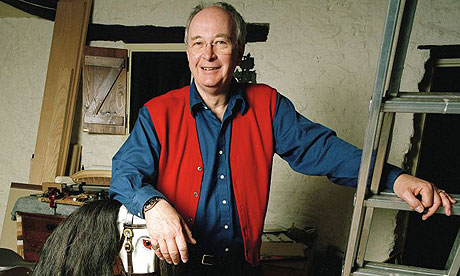
Philip Pullman's latest offering is a retelling of the story of Jesus, and it has already ruffled a few feathers. It looks excellent! I haven't read it yet, but if anyone has, please feel free to add your comments below.
If you haven't read it, you can catch an excerpt at the Guardian.
Subscribe to:
Posts (Atom)